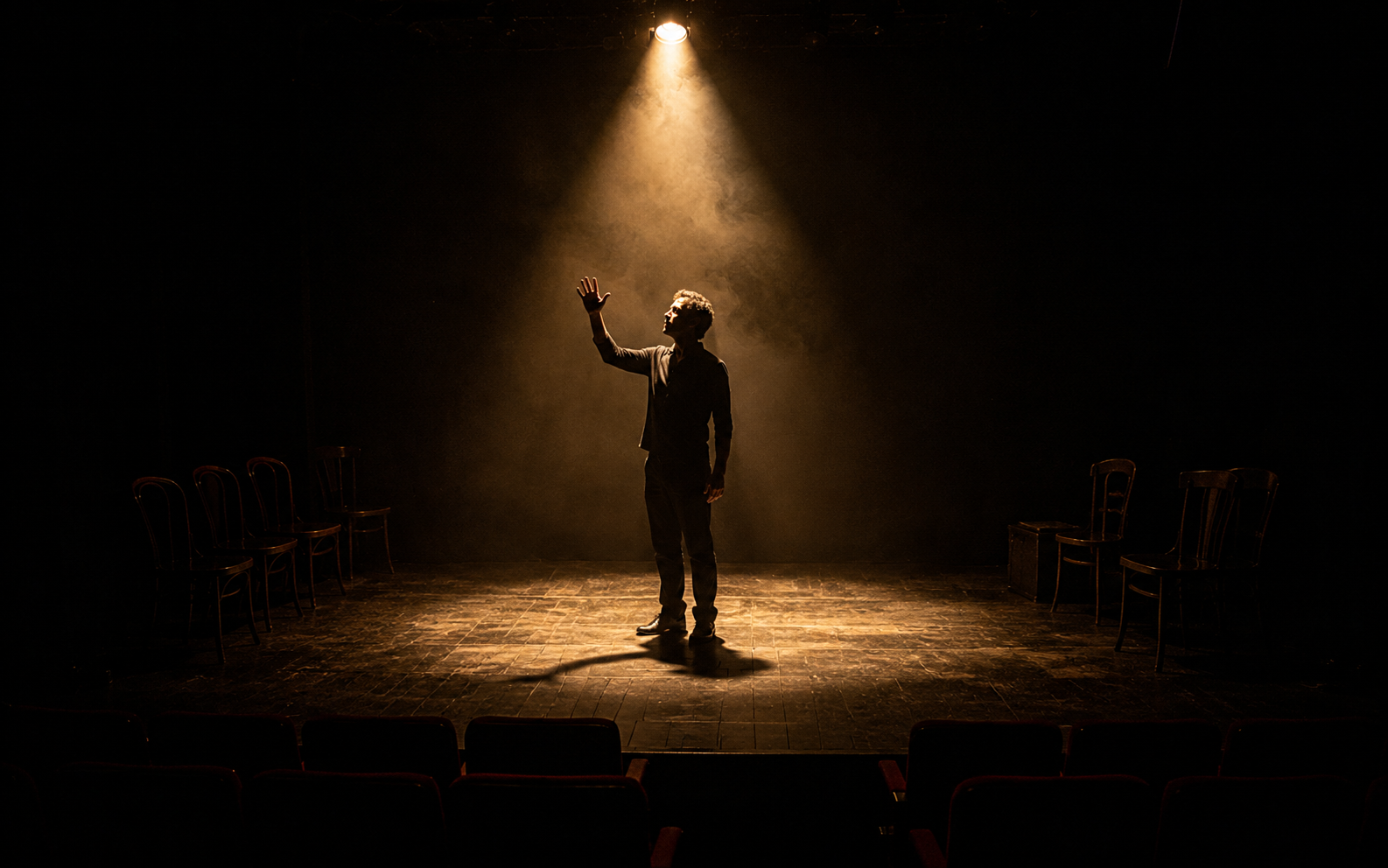
Strip away the ensemble, the elaborate sets, the lighting rigs that cost more than a small car. Put one person on a stage with nothing but a script and their nerve. That's the one-person show — theatre reduced to its barest, most terrifying essentials.
Why Solo Performance Endures
The one-person show has been a fixture of the theatrical landscape for decades, from Spalding Gray's monologues at a wooden desk to Phoebe Waller-Bridge filling arenas with Fleabag. The format endures because it offers something uniquely intimate: a single consciousness unfolding before an audience in real time.
There's nowhere to hide in solo performance. No scene partner to cover a fumbled line, no costume change to reset the energy. The performer carries everything — character, narrative, atmosphere — on their shoulders alone. When it works, it creates a connection between performer and audience that larger productions can rarely achieve.
The Economics of One
Practicality plays its part too. A one-person show can tour with a suitcase. It can perform in a pub back room or a 500-seat venue with minimal adaptation. For emerging artists without access to funding or large companies, the solo show represents creative freedom without gatekeepers.
Edinburgh Fringe has become the proving ground for solo work precisely because the economics align. A single performer can afford the venue hire, manage their own marketing, and still turn a modest profit if reviews are kind. It's theatre entrepreneurship at its leanest.
Vulnerability as Craft
The best one-person shows trade on vulnerability. They invite the audience into a private space — a memory, a confession, an argument with oneself. Daniel Kitson builds entire worlds from anecdotes and cardboard boxes. Michaela Coel turned her Edinburgh debut into a career-defining statement about consent and identity.
What unites the great solo performers isn't charisma or technical brilliance, though both help. It's the willingness to be genuinely exposed. To stand before strangers and say: this is what I think, this is what happened to me, this is what I'm afraid of.
The Audience's Role
In a one-person show, the audience becomes the scene partner. Their laughter, their silence, their shifting in seats — all of it feeds back into the performance. A great solo performer reads the room like a musician reads a score, adjusting tempo and intensity in response to the collective energy.
This reciprocity is what separates live solo performance from, say, a podcast or a filmed special. The show doesn't exist without the audience. It's not a broadcast — it's a conversation disguised as a monologue, and that distinction makes all the difference.