Laurence Olivier once confessed that for five years during the height of his career, he was so paralysed by stage fright that he begged fellow actors not to look him in the eye during performances. If Olivier — perhaps the greatest stage actor of the twentieth century — couldn't escape it, what hope do the rest have?
The Biology of Fear
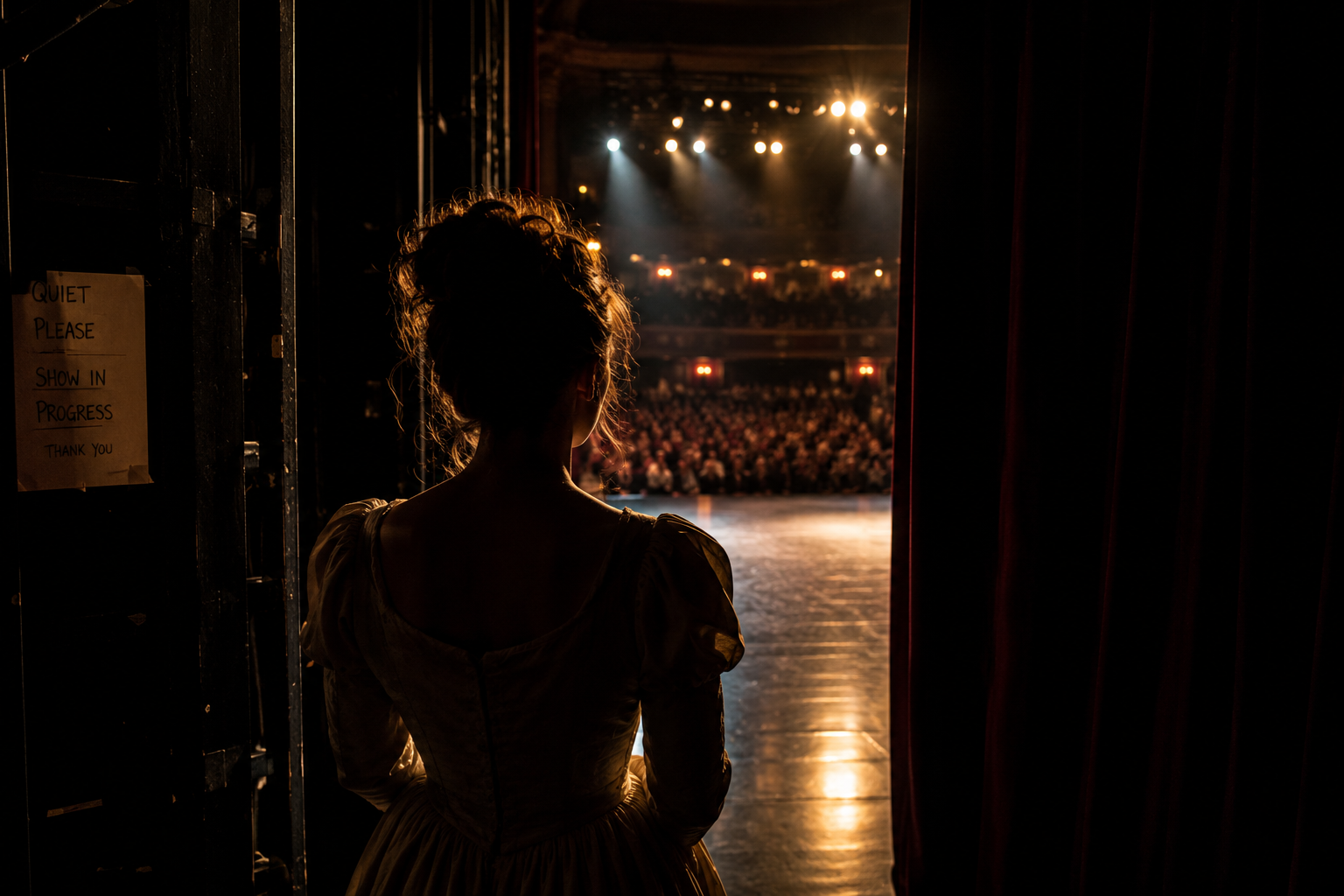
Stage fright isn't a character flaw or a sign of inadequate preparation. It's a biological response — the amygdala registering hundreds of pairs of eyes as a threat and flooding the body with cortisol and adrenaline. Heart rate spikes. Hands tremble. The voice, that essential instrument, tightens and thins. The body prepares to fight or flee from an audience that is, by almost any rational measure, entirely benign.
What makes performance anxiety particularly cruel is that it targets the very tools a performer needs most. A pianist's fingers stiffen. A singer's throat constricts. An actor's memory — that vast architecture of learned text — suddenly develops cracks in its foundation.
The Paradox
Here's what makes this fascinating rather than merely miserable: many performers report that their best work happens in the presence of fear, not its absence. The heightened awareness that comes with adrenaline can sharpen timing, deepen emotional access, and create a quality of presence that relaxed confidence simply cannot match.
Barbra Streisand famously avoided live performance for 27 years after forgetting lyrics at a 1967 concert. When she finally returned, she described the terror as inseparable from the intensity that audiences responded to. The fear and the art were the same energy, differently directed.
Strategies and Superstitions
Performers develop elaborate rituals to manage anxiety. Some are evidence-based — diaphragmatic breathing, progressive muscle relaxation, cognitive reframing. Others border on superstition: a specific pair of socks, a pre-show playlist that hasn't changed in twelve years, touching the stage door frame three times before entering.
The rituals work not because they're rational but because they provide a sense of control in an inherently uncontrollable situation. Once the lights come up, anything can happen. The ritual says: I've done this before, I survived, I'll survive again.
Living With It
The most experienced performers don't overcome stage fright — they develop a working relationship with it. They learn to interpret the racing heart not as panic but as readiness. They accept that the fifteen minutes before a performance will always be uncomfortable and plan accordingly. They understand that the audience isn't an adversary but a collaborator, equally invested in the success of the evening.
Perhaps that's the real paradox: the performers who feel nothing before they walk on stage often deliver less than those who feel everything. Vulnerability, it turns out, isn't just good theatre — it's good preparation.