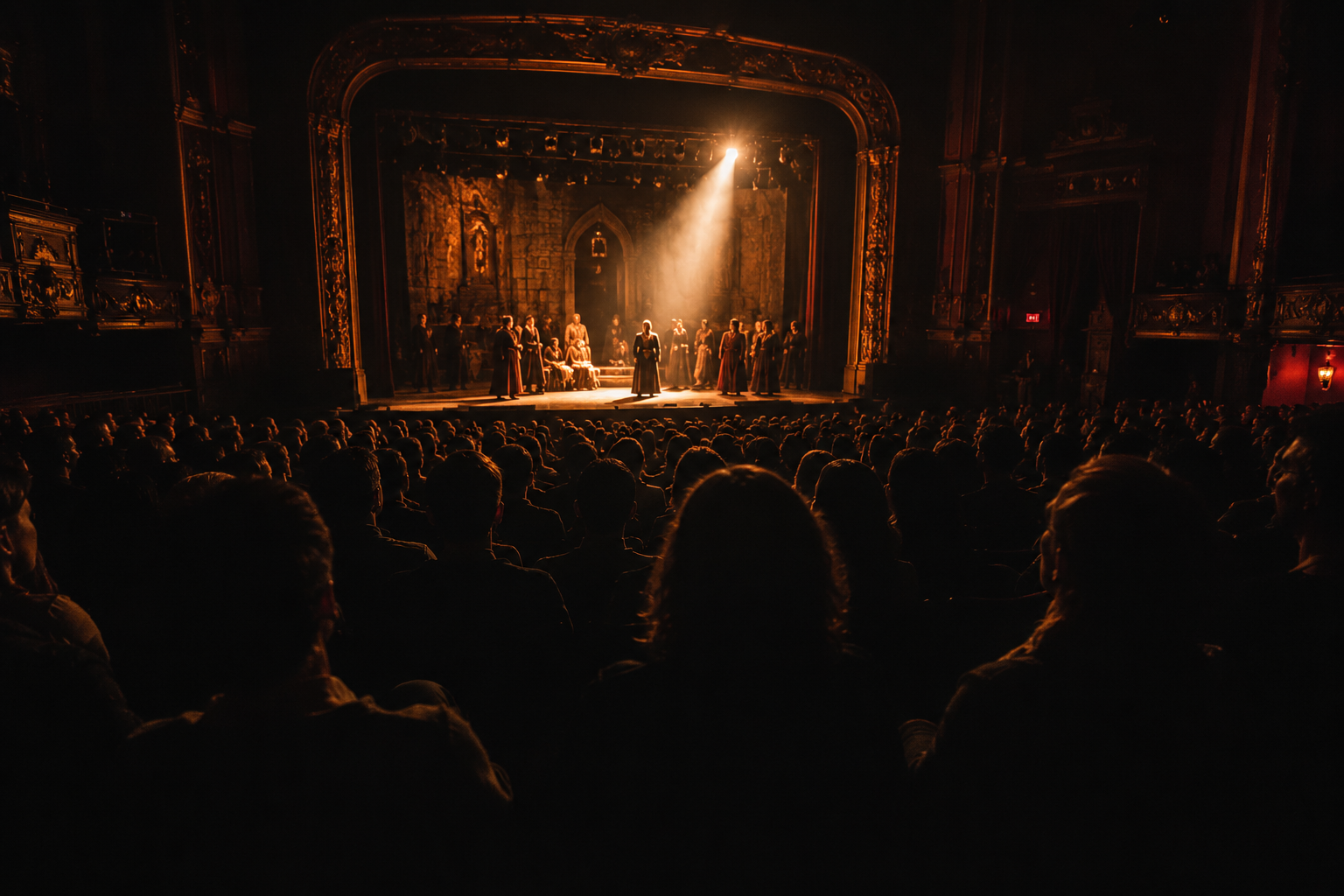
For a decade, immersive theatre seemed like it might remain a niche curiosity — the province of Punchdrunk devotees and escape-room enthusiasts with literary pretensions. But something shifted around 2023. Audiences returned from lockdown-induced isolation craving experiences that demanded more than passive observation. They wanted to be inside the story, not watching it from row G.
Beyond Sleep No More
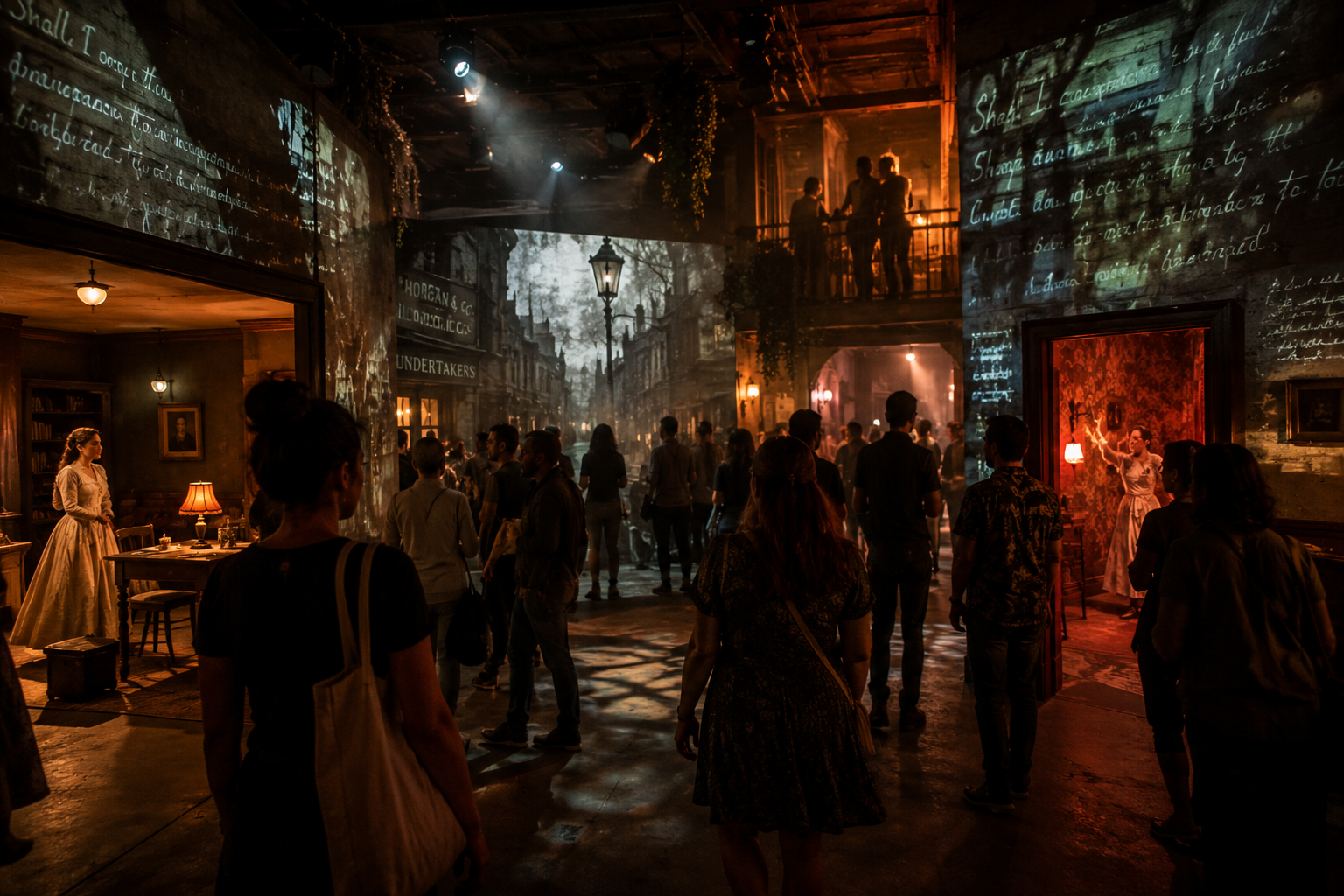
Punchdrunk's Sleep No More remains the reference point for most discussions of immersive work, but the form has evolved dramatically since that masked exploration of a recreated 1930s hotel first opened in 2011. Today's immersive theatre encompasses everything from intimate one-on-one performances in hotel rooms to large-scale narrative experiences spread across entire city blocks.
The key development isn't scale but sophistication. Early immersive work often relied on spectacle and novelty — the thrill of being allowed to open drawers, wander freely, touch things in a theatrical space. Contemporary practitioners are more interested in genuine agency and emotional consequence. The best new work makes audiences feel that their choices matter, that the story responds to their presence in meaningful ways.
The Technology Question
Technology has expanded immersive theatre's toolkit without replacing its fundamentals. Spatial audio, responsive lighting, and even augmented reality elements can enhance the sense of inhabiting a fictional world. But the most powerful immersive experiences still rely on the oldest theatrical technology of all: a performer looking you in the eye and speaking directly to you, as though you are the only person who matters.
Companies like Darkfield use shipping containers and binaural audio to create claustrophobic horror experiences for audiences of twenty. Secret Cinema builds elaborate environments for hundreds. Both succeed not because of their technology but because they understand that immersion is fundamentally about vulnerability — the willingness to surrender control of your experience to someone else.
Accessibility and Exclusion
Immersive theatre faces legitimate criticism around accessibility. Physical demands — standing, walking, climbing stairs, navigating dark spaces — can exclude audience members with mobility limitations. The often-unpredictable nature of immersive experiences can be overwhelming for neurodivergent audiences who benefit from knowing what to expect.
Forward-thinking companies are addressing these concerns through detailed content warnings, relaxed performances, alternative routes through their spaces, and seated options that don't compromise the immersive quality of the experience. It's work in progress, but it matters.
Why Audiences Keep Coming Back
The revival of immersive theatre reflects something deeper than a trend in theatrical form. It speaks to a genuine hunger for experiences that can't be replicated on a screen — for stories that happen to you rather than in front of you, for art that acknowledges your physical presence in space. In a culture saturated with content, immersive theatre offers something increasingly rare: an experience you cannot scroll past, fast-forward, or consume half-attentively while checking your phone. You have to be there, fully, or not at all.